Hand-Cash Jobs in Japan: Timing, Risks & Visa Impact
Please support us by sharing!
Many part-time workers especially students and foreigners turn to hand-cash jobs (手渡しバイト) in Japan for quick and flexible income. But the timing of payment, lack of paperwork, and legal risks vary widely. This post investigates when cash is paid (often same-day but sometimes a month later), who takes these jobs, and how they affect visa status.

1. Speed of Payment: Same-Day or Delayed?
The idea of instant pay is what draws many to hand-cash work, but the reality can vary:
- Same-day pay: Common for one-off gigs like moving jobs, events, or flyers.
- Next-day or weekly: Informal batch payments may come a few days later.
- Monthly cycles: Some hand-cash jobs pay at fixed dates like the 25th or end of month even if the wage is handed in cash.
By Japanese labor law, wages must be paid at least monthly, in full, and on a scheduled date.
2. No Paperwork: What That Really Means
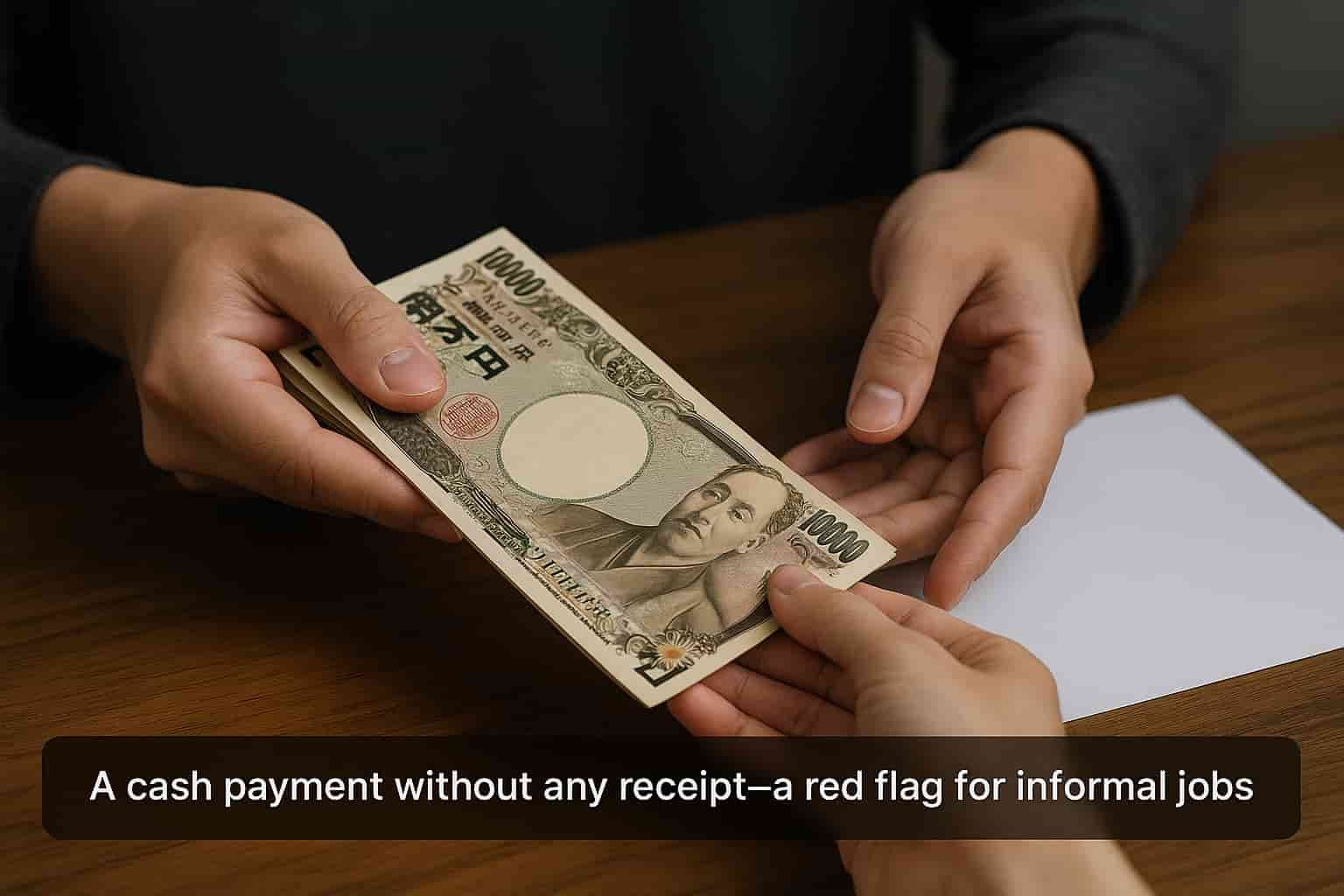
Hand-cash jobs usually skip contracts, timesheets, and tax forms:
- No payslip or source tax documentation
- No formal tracking of hours
- No social insurance or accident insurance coverage
However, even cash jobs are legally expected to provide wage details. Workers should always:
- Note hours worked and keep photos of payment when possible
- Request at least a written receipt or breakdown
3. Flexibility: One-Day Gig or Weekly Routine?
These jobs come in two forms:
- One-time gigs: Event staff, moving helpers paid right after work.
- Short-term routines: Repeated work (e.g., 3 times/week) with cash payments on fixed dates.
While some expect daily pay, others mimic formal jobs with structured monthly payouts just in cash.
4. Who Takes These Jobs?
Typical candidates include:
- Foreign students without bank accounts
- Backpackers or tourists seeking short gigs
- Freelancers or undocumented workers looking for unregistered income
- Locals avoiding paperwork or needing quick pay
For students especially, Japan’s high living costs often exceed what they can legally earn through part-time jobs. With a 28-hour weekly work limit, many turn to hand-cash jobs to cover rent, tuition, and daily expenses, even if it puts them at legal risk.
These jobs are informally shared through LINE, Facebook, Craigslist, or JMTY—usually by individuals, not official employers. Always use caution and verify legitimacy.
These jobs are also popular because they often don't require Japanese language skills. Tasks are usually fixed, repetitive, and taught on the spot, making it easy for non-speakers to complete them successfully. Finally, many of these roles are organized through informal social media groups. Facebook pages or Viber/LINE groups post job slots (like bed‑making, cake factory work, flyer distribution), arrange participants, and handle cash payment, all without formal paperwork.
5. Legal & Visa Risks
Hand-cash jobs may violate:
- Labor law: No monthly wage schedule or proper reporting
- Immigration rules: Students over 28hr/week or without permits are in danger
- Tax law: No withholding or income declaration
Consequences include rejected visa renewals, fines, or deportation. Even small violations can flag your record.

6. Payment Style Comparison
| Method | Timing | Documentation |
|---|---|---|
| Cash (same-day) | End of workday | Rarely provided |
| Cash (monthly) | Fixed date (e.g., 25th) | Sometimes informal note |
| Bank transfer | Fixed monthly cycle | Full payslip + tax |
7. Pros and Cons of Hand-Cash Jobs
Pros
- Immediate cash in hand after work (for some jobs)
- No need for a Japanese bank account
- Flexible schedules with one-day commitment options
- Simple to join, often without interviews or resumes
Cons
- Inconsistent or delayed payment depending on employer
- No legal contract or worker protection
- Risk to visa status for international workers
- No tax proof or payslip for future use (e.g., renting apartment)
- Potential for exploitation or unpaid hours
8. Safety Tips
- Confirm pay date and method in writing
- Track hours yourself with notes or screenshots
- Avoid jobs that push unclear roles or "trial days" with no pay
- Keep income records in case of visa renewal questions
Conclusion
Hand-cash jobs in Japan offer quick pay and flexibility—but also hidden dangers. Not all of them pay daily. Some mirror formal payroll cycles with no legal protection. For foreigners, especially students, undocumented work can seriously impact visa status.
Always confirm payment details, stay within legal working hours, and prioritize documented part-time jobs when possible.
Disclaimer: This blog post is intended for general educational and informational purposes only. The information presented is based on publicly available sources, including blogs, news articles, and online videos. It is not directed toward any specific individual, nationality, profession, student group, or work category. We do not promote or encourage illegal employment practices in Japan. Readers are strongly advised to consult with legal professionals, immigration specialists, or relevant authorities before taking any employment-related actions.